
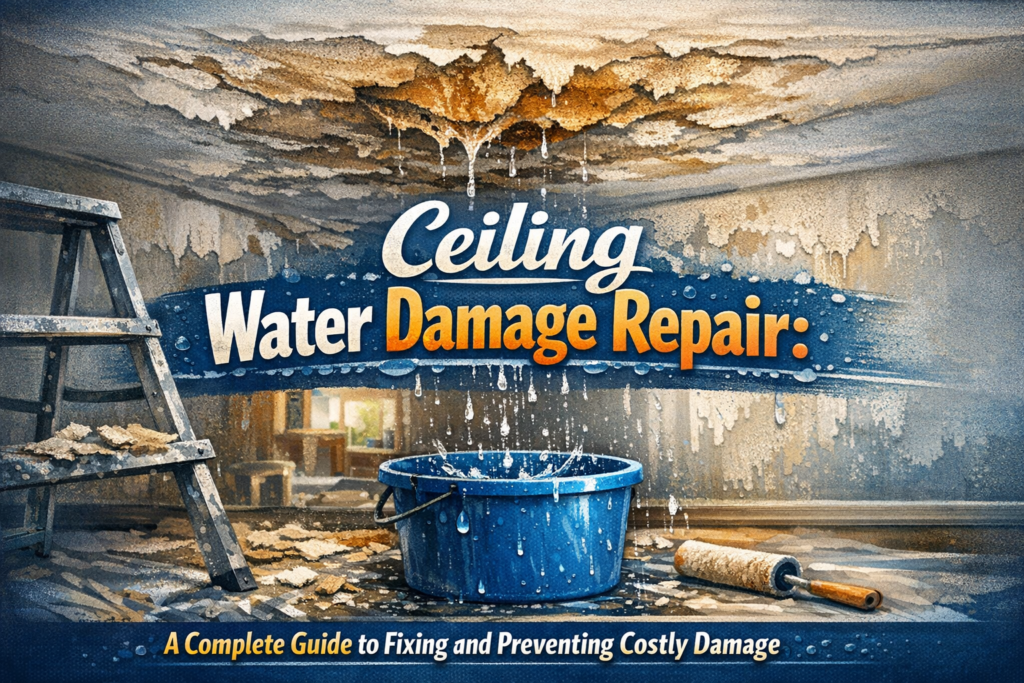
Water damage on your ceiling is more than just an unsightly stain—it’s often a warning sign of a deeper problem. Whether caused by a leaking roof, burst pipe, or poor insulation, ceiling water damage can weaken your home’s structure and lead to mold growth if left untreated. Understanding how to address this issue promptly and effectively is essential for protecting your property and maintaining a safe living environment.
In this guide, we’ll walk you through everything you need to know about ceiling water damage repair, from identifying the source to choosing the right local repair services.
What Causes Ceiling Water Damage?
Before jumping into repairs, it’s important to understand what’s causing the damage. Common sources include:
- Roof leaks due to damaged shingles or clogged gutters
- Plumbing issues such as leaking pipes or faulty fixtures
- HVAC problems, especially from condensation buildup
- Exterior wall damage allowing water to seep into your home
- Poor insulation leading to moisture accumulation
Identifying the root cause is critical. Repairing the ceiling without fixing the source will only result in recurring damage.
Signs of Ceiling Water Damage
Water damage isn’t always immediately obvious. Here are some warning signs to look out for:
- Brown or yellow stains on the ceiling
- Peeling or bubbling paint
- Sagging or warped ceiling sections
- Dripping water or damp spots
- Musty odors indicating mold growth
If you notice any of these, it’s time to act quickly.
Step-by-Step Ceiling Water Damage Repair
1. Locate and Fix the Source
Before repairing the ceiling, address the underlying issue. This might involve:
- Repairing a leaking roof
- Fixing plumbing leaks
- Sealing cracks in exterior walls
This step ensures that the problem doesn’t return after repairs.
2. Dry the Affected Area
Moisture trapped in your ceiling can lead to mold and structural damage. Use:
- Fans and dehumidifiers
- Proper ventilation
- Towels or absorbent materials for minor leaks
Allow the area to dry completely before proceeding.
3. Remove Damaged Material
If the ceiling is severely affected, you may need to:
- Cut out damaged drywall or plaster
- Remove insulation if it’s wet
- Dispose of compromised materials safely
This prevents further deterioration and ensures a clean surface for repair.
4. Repair and Patch the Ceiling
Once the area is clean and dry:
- Install new drywall or patch the affected section
- Apply joint compound and sand it smooth
- Repaint to match the rest of the ceiling
For minor stains, a stain-blocking primer may be enough before repainting.
5. Inspect for Mold
Water damage often leads to mold growth. If you notice black spots or a musty smell:
- Use mold-resistant treatments
- Wear protective gear during cleaning
- Consider hiring water damage professionals for severe cases
When to Call Water Damage Professionals
While minor damage can be handled as a DIY project, some situations require expert help:
- Extensive water damage covering large areas
- Structural weakening or sagging ceilings
- Hidden leaks inside walls or ceilings
- Mold infestations
Water damage professionals have the tools and expertise to handle complex repairs safely and efficiently.
Importance of Local Repair Services
Hiring local repair services offers several advantages:
- Faster response times in emergencies
- Familiarity with regional weather conditions
- Easier communication and follow-up
- Cost-effective solutions
Local experts can quickly assess the situation and recommend the best course of action tailored to your area.
Role of Exterior Wall Repair in Preventing Ceiling Damage
Many homeowners overlook the connection between exterior walls and ceiling damage. Cracks or gaps in exterior walls can allow water to seep in, eventually affecting ceilings.
Regular exterior wall repair can:
- Prevent water infiltration
- Improve insulation and energy efficiency
- Extend the lifespan of your home’s structure
Addressing exterior issues early can save you from costly ceiling repairs later.
Cost of Ceiling Water Damage Repair
The cost varies depending on the severity of the damage:
- Minor repairs: $100–$500
- Moderate damage: $500–$1,500
- Severe structural repairs: $2,000+
Factors influencing cost include:
- Size of the affected area
- Type of ceiling material
- Labor charges
- Extent of underlying damage
Getting multiple quotes from local repair services can help you find the best deal.
Preventing Future Water Damage
Prevention is always better than repair. Here are some tips to keep your ceiling in good condition:
- Inspect your roof regularly
- Clean gutters and downspouts
- Check plumbing for leaks
- Seal cracks in exterior walls
- Ensure proper ventilation in bathrooms and kitchens
Routine maintenance can significantly reduce the risk of water damage.
Final Thoughts
Ceiling water damage repair is not just about fixing visible issues—it’s about addressing the root cause and preventing future problems. Whether you’re dealing with a small stain or major structural damage, taking prompt action is key.
By working with reliable local repair services, addressing exterior wall repair needs, and consulting experienced water damage professionals when necessary, you can restore your home and protect it from further damage.
Ignoring the problem may lead to higher costs and health risks down the line. So, the moment you notice signs of water damage, take action and ensure your home stays safe, dry, and structurally sound.